


Investing
Return Examples
Real-world examples of the extraordinary returns that rare collectibles and numismatic investments can deliver over time.
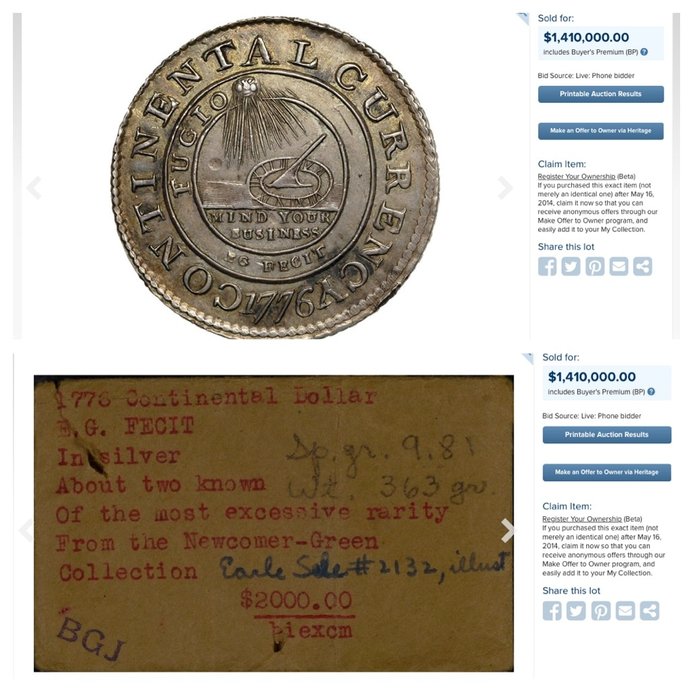
Here’s a good example of the returns that can be made in rare collectibles: this coin was purchased for $2,000 back in 1981 (that’s the original receipt) and just sold in excess of $1,400,000. We have countless examples like this.
This industry isn’t a “get rich quick scheme” like the stock market; it requires time, patience, and countless hours of research. That being said, it also doesn’t have near the amount of risk as the markets, as long as you do thorough research, your downside is extremely limited and your upside has potentially extraordinary returns.
Unlike equities, where a stock can plummet or a business can go completely bankrupt overnight, waking up every day without those worries is priceless. These investments only go up as long as there’s never a need for forced liquidation due to a financial bind.
Why Rare Coins & Treasure Outperform Traditional Markets
Most investors pour everything into stocks, bonds, and real estate , assets that are entirely subject to the whims of central banks, corporate earnings calls, and market sentiment. Rare coins and historical treasure operate in a fundamentally different world. Their value is rooted in something no algorithm can replicate: scarcity, history, and the irreplaceable nature of the objects themselves.
Tangible assets with intrinsic value. A certified rare coin doesn’t need a quarterly earnings report to justify its worth. It’s a physical object with precious metal content, historical significance, and collector demand that has persisted for centuries. You can hold it in your hand; try doing that with a share of stock.
Limited supply drives long-term appreciation. There will never be more gold escudos from the 1715 Spanish Treasure Fleet or silver reales from the Atocha. Once a shipwreck is recovered, that’s the entire supply, forever. Every year, pieces are absorbed into private collections and museums, shrinking what’s available while demand from collectors and investors continues to grow. That’s a pricing dynamic most asset classes can only dream of.
Uncorrelated to stock market volatility. When markets crash, 2008, 2020, or any of the corrections in between, rare coins don’t follow the S&P 500 down. In fact, during periods of economic uncertainty, tangible assets often see increased demand as investors seek stores of value outside the traditional financial system.
A historical track record spanning centuries. People have been collecting and trading rare coins since ancient Rome. This isn’t a new asset class or a speculative trend ; it’s one of the oldest stores of wealth in human history. The market has survived world wars, depressions, and every financial crisis in between.
The Case for Shipwreck Treasure & Historical Artifacts
Shipwreck treasure occupies a unique space in the collectibles market. These aren’t just coins or artifacts; they’re pieces of history recovered from the ocean floor, each one carrying a story that connects the owner to a specific moment in time. That provenance is what separates treasure from ordinary numismatics, and it’s what drives extraordinary long-term value.
Provenance and rarity create compounding value. A coin is a coin. But a coin recovered from the SS Central America or the Atocha carries a story that no mint can reproduce. As years pass and the recovery becomes more distant history itself, the provenance premium only grows. We’ve watched this happen consistently across every major shipwreck recovery.
Growing collector demand vs. fixed supply. The number of serious collectors entering the market increases every year, fueled by documentaries, museum exhibitions, and a growing awareness of tangible assets as wealth preservation tools. Meanwhile, the supply of authenticated shipwreck treasure is permanently fixed , and once a wreck is recovered, that’s it.
Authentication and grading provide price transparency. Unlike fine art or other collectibles where valuation can feel subjective, rare coins and treasure benefit from established grading systems (PCGS, NGC) that provide objective condition assessments. This transparency gives buyers confidence and creates liquid, efficient secondary markets.
Case Study: Documented Returns
Click any image below to view full-size documentation of actual investment returns.